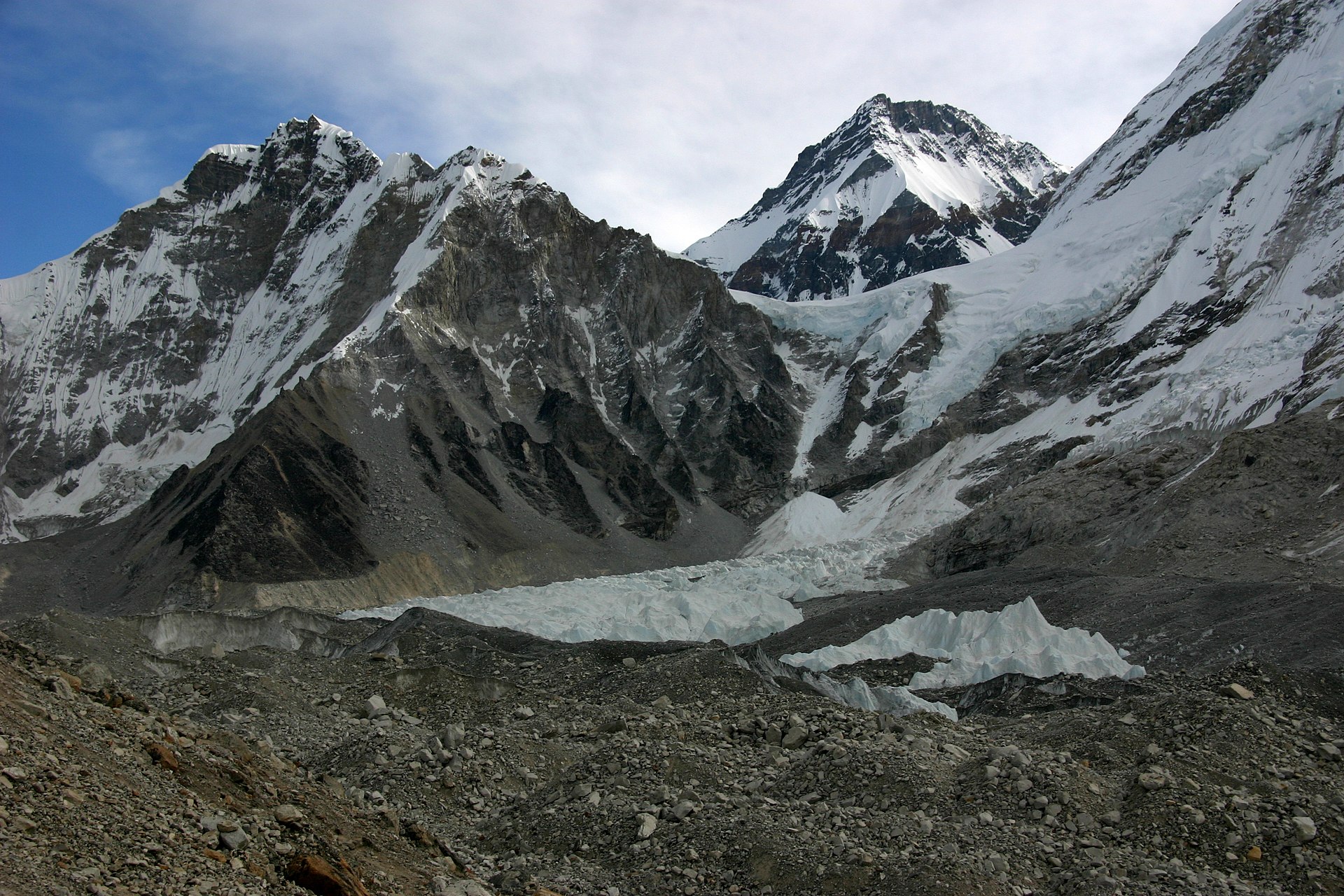
Kala Patthar at 5,545 metres is the highest point of any standard Everest Base Camp itinerary — and the reason most trekkers do the trek at all. EBC itself doesn't actually show Everest's summit (it's hidden behind the Khumbu Icefall and Nuptse). Kala Patthar does. Here's the hour-by-hour from 03:30 wake-up at Gorakshep to 06:30 summit photo.
The night before — at Gorakshep
You're at Gorakshep, 5,164 m. Coldest night of the entire trek (-15 to -20 °C). Four teahouses: Buddha Lodge, Himalayan Lodge, Snowland Inn — all roughly the same standard, all NPR 1,500 twin shared, all walk-in only. Whichever has a bed left when you arrive.
You've just walked back from Everest Base Camp (8–9 h day total). You're exhausted. Eat dinner by 18:30 — dal bhat with extra rice if you can stomach it. Drink one full litre of water. Pack the day pack for tomorrow — no headtorch fumbling at 03:30. Set the alarm. Set TWO alarms.
Lie in your bag at 19:30 with the dinner-warm body still radiating. Sleep is poor at 5,164 m — expect 4–5 hours of broken rest. That's normal. Don't take sleeping pills (they suppress breathing at altitude).
03:30 — Wake and walk
It's -18 °C outside the bag, -5 °C inside the room. Down jacket on first, before anything else. Headlamp on, boots laced, gloves + mitts on, balaclava up to the nose. Tea + biscuits at the dining hall (lodges have it ready by 03:50). Don't try to eat porridge — appetite is gone at this altitude and forcing food worsens the headache.
Walking by 04:30. You step outside into pitch dark, -15 °C, wind. The trail to Kala Patthar starts directly behind the lodges — a steep rocky slope, marked by stone cairns visible in the headtorch beam. You'll see 20–30 other headtorches already moving up. Step into the line.
04:30–06:00 — The climb
Kala Patthar is 381 m of vertical above Gorakshep, in 1.5–2 hours. Sounds easy at sea level. At 5,200 m, it's the hardest 90 minutes of the entire trek.
Pace is slow — 50 steps, 30 second rest, repeat. If you're out of breath, you are walking too fast. If your headtorch lights up your own breath cloud and you can see the cloud reaching up to the brim of your hat, you are walking too fast. The 30-second-rest rhythm gets people to the top; the "I'll just push through" approach turns people back at 5,300 m.
The trail is straightforward — well-worn, marked, hard to lose. Microspikes go on if there's fresh snow or icy patches (common Nov–April). Rent in Kathmandu or Pheriche for NPR 200/day.
~05:30 you can see the first hints of daylight on Everest's south face above the Khumbu Icefall. The summit is still in shadow. Keep walking.
06:00–06:30 — Summit window
You arrive at a flat-ish rocky platform covered in prayer flags. Stone cairn marks the summit (5,545 m on the GPS; some guides quote 5,643 m — the lower number is the actual peak elevation, the higher is the surveyor pole). Wind tearing across at 40–50 km/h.
06:15–06:30: The sunrise hits Everest's summit. The first light is gold, then orange, then white — the kind of light that doesn't photograph well but burns into memory. Everest (8,849 m) dominates the centre. Lhotse (8,516 m) to the right. Nuptse (7,861 m) closer in. Pumori (7,161 m) right behind you. The Khumbu Icefall a 2,000-m glacial cascade below.
You have 15 minutes before the cold becomes unmanageable. Take the photos:
- Wide: Full Everest panorama with the prayer flags in foreground.
- Portrait: You at the cairn, Everest summit behind your head.
- Video: Slow 360° turn from the cairn — captures the Pumori → Everest → Lhotse → Nuptse circle.
Then start descending. Staying longer doesn't improve the photo; it increases the cold-injury risk.
06:30–07:30 — Descent
Descent is 30–45 minutes back to Gorakshep. Faster than the climb because gravity helps and you're not gasping. The same scree that was treacherous in the dark is just rocky in the light — be careful but you'll be back at the lodge for breakfast by 08:00.
Breakfast at Gorakshep, pack up, start the long descent to Pheriche (4,371 m) — 4–5 hours, 793 m of altitude loss. The further you descend, the better you feel; by Pheriche your appetite is back and the headache is gone.
The failure modes
Too cold on the climb (~40% of unhappy summit experiences). Symptoms: numb fingers + toes, shivering, can't operate camera. Treatment: layer up at the summit (down jacket OVER hardshell, mitts over liners), get the photo in 5 minutes, descend. Don't try to "tough it out" at the cairn for 30 minutes.
AMS on the climb (~15% of failed summit attempts). Symptoms: severe headache, nausea, ataxia (stumbling). Treatment: stop walking, descend to Gorakshep. The pre-dawn cold makes AMS feel worse than it would mid-afternoon. If you can't get to the summit, descend to lower altitude and your day improves dramatically.
Sunrise missed because of cloud (~10%). Random weather. Can't be prevented. Many trekkers go up Kala Patthar in the AFTERNOON instead (~14:00–16:00, ~2 h round trip) for a sunset view — less crowded, often clearer in Oct–Nov. We sometimes recommend afternoon when the morning forecast is bad.
Headtorch battery dies mid-climb (~5%). Cold drains alkaline batteries fast. Carry spares in an inner pocket against the body. Lithium batteries (Energizer Ultimate Lithium) hold their charge in the cold — worth the upgrade.
The acclim that decides this day
Kala Patthar success depends on what you did 5 days earlier. The single biggest predictor in our records is whether you took the full 2-night acclim at both Namche AND Dingboche, with active hikes (Everest View Hotel from Namche, Nangkartshang Peak from Dingboche). Skip either and Kala Patthar summit rate drops from ~95% to ~70%.
Use both acclim days actively, not passively. Drink 4+ litres of water daily from Namche onward. Diamox 125 mg twice daily starting from Namche.
Kala Patthar day pack contents
- 1.5 L water in insulated bottle or thermos (Nalgenes freeze)
- Headlamp + spare LITHIUM battery in inner pocket
- Down jacket (you'll wear it the whole climb)
- Liner gloves + insulated mitts
- Balaclava + buff
- Cat-3+ sunglasses (for after sunrise)
- Sunscreen SPF 50+ + lip balm SPF (apply at the summit)
- 2× chocolate bars + 1 energy bar
- Microspikes (Nov–Apr)
- Trekking poles (short for the steep ascent)
- Phone / camera (in inner pocket — cold kills batteries)
About 3 kg. You'll leave the main pack at the Gorakshep lodge — only carry essentials for the 2-hour round trip.
The afternoon Kala Patthar option
Less-discussed alternative: many trekkers skip the sunrise climb and go up Kala Patthar in the afternoon of the EBC day (after returning from Base Camp). Pros: warmer (-5 °C vs -15 °C), often clearer in October-November (morning cloud burns off), no headtorch needed. Cons: less iconic light, you're tired from the EBC walk, the views are still spectacular but lose the gold-on-summit moment.
If you're 50+, or you're worried about the cold, consider the afternoon climb. The "sunrise is non-negotiable" rule is a marketing line, not a safety one.
Bottom line
Kala Patthar at sunrise is the EBC trek's defining moment. The 90-minute climb in -15 °C dark is harder than every other moment of the trek combined, and the 15 minutes at the cairn are why you came. With proper Namche + Dingboche acclim, the right kit, and a disciplined 30-second-rest rhythm, the summit rate is ~95%. Without those, it's a 50-50 with a turnaround at 5,400 m and a long descent in your own disappointment.
Plan the rest of the trek around making this morning work.