Why Mera Peak?
At 6,476 m, Mera Peak is the highest trekking peak in Nepal — and one of the most accessible 6,000 m summits in the world for fit trekkers with no prior climbing experience. From the top you look across five of the planet's ten highest mountains: Everest, Lhotse, Makalu, Cho Oyu and Kanchenjunga. Unlike the busy Everest Base Camp trail, the approach through the Hinku valley is wild and almost empty.
The route
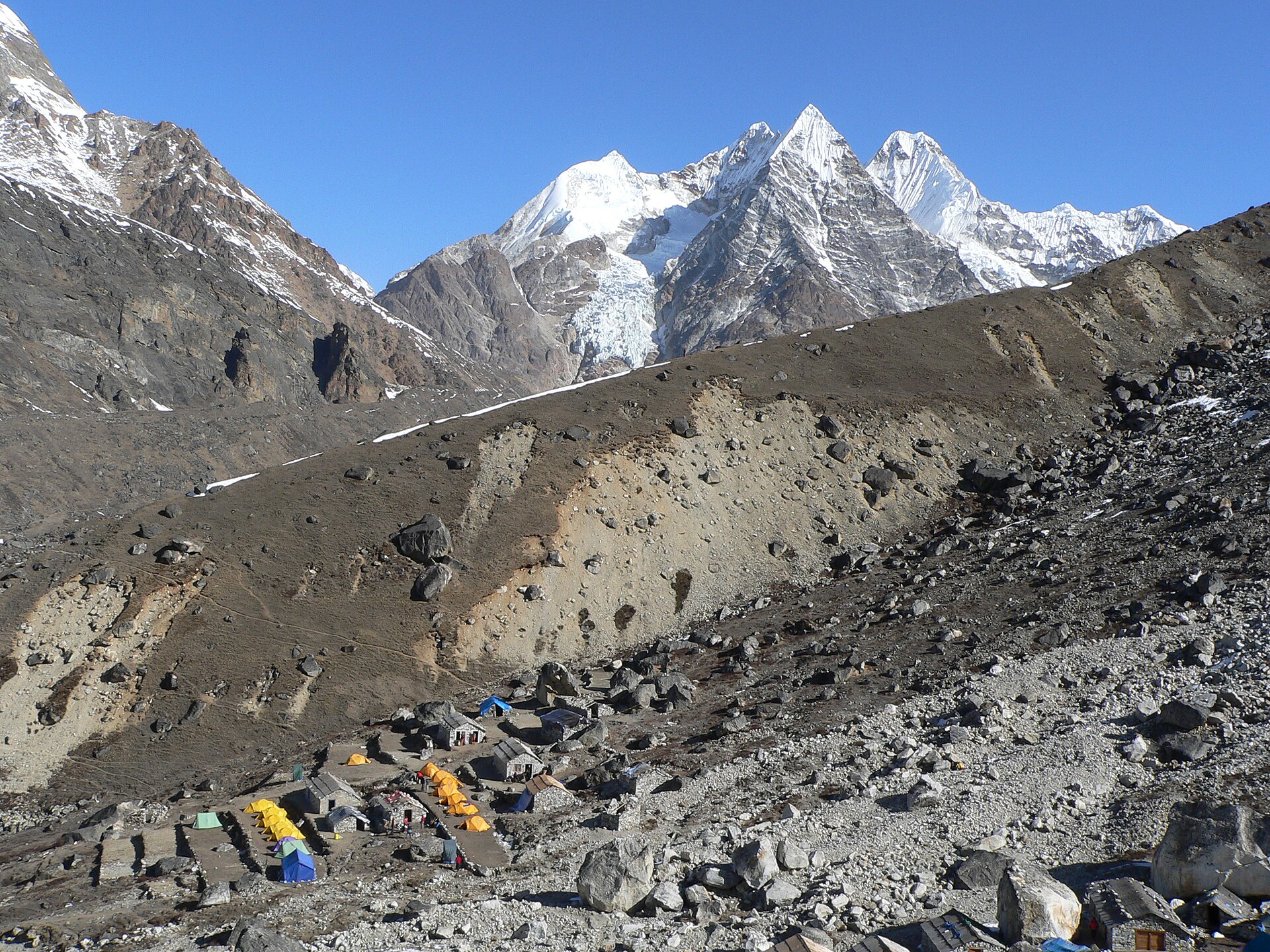
You fly into Lukla, then cross the Zatrwa La (4,610 m) away from the main Everest trail into the forested Hinku valley. The trail climbs through Kothe and Thaknak to Khare (5,045 m), the base for acclimatisation and basic mountaineering training, before the high camp at 5,800 m and a pre-dawn summit push.
Permits
- NMA Mera Peak climbing permit — USD 250 in spring, USD 175 in autumn, USD 75 in winter/summer.
- Makalu Barun National Park entry permit (~USD 30).
- Local rural-municipality permit and a licensed climbing guide (mandatory).
Difficulty & training
Mera is graded alpine PD — non-technical, with no rock or steep ice — but the altitude makes it serious. You'll use crampons, an ice-axe and a fixed rope on summit day. Train with long hill days carrying a pack, and build cardio endurance for months beforehand. Acclimatisation discipline is the single biggest factor in summit success.
Best season
October–November offers the most stable post-monsoon weather; March–May is warmer with more snow underfoot. Allow a weather-buffer day at Khare — summit windows are short and conditions change fast.
How long?
Budget 14–18 days from Kathmandu including Lukla flights and acclimatisation. Shorter 14-day trips are possible for the well-acclimatised; 17–18 days gives the safety margin most people need.