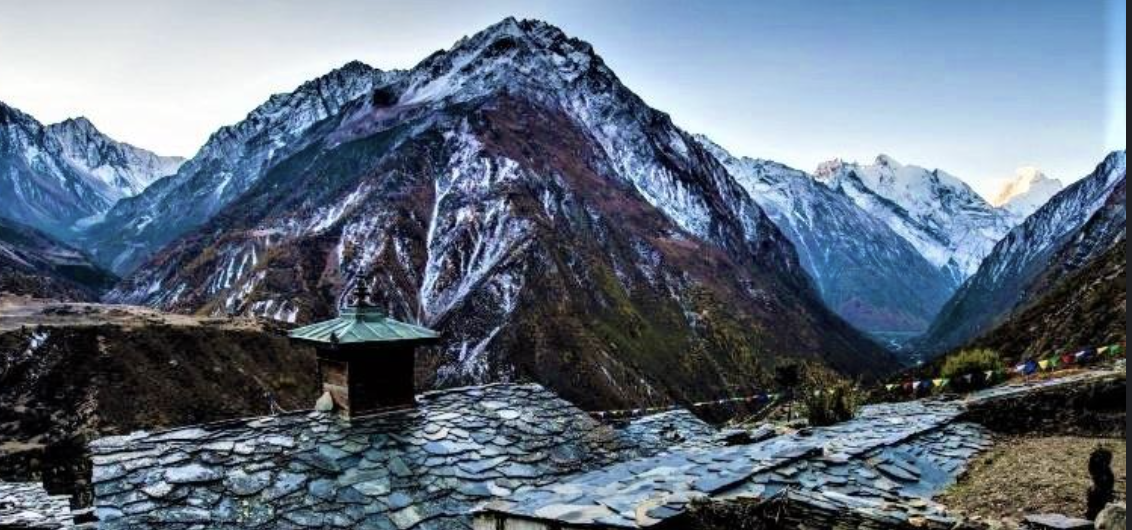
The Mu Gompa monastery at 3,700 metres is the northernmost point of the Tsum Valley trek — and the only place in Nepal where standard trekkers routinely sleep INSIDE an active Buddhist monastery, eating with the monks, attending dawn + dusk prayer sessions. Here's what that night actually looks like.
Where you actually sleep
Mu Gompa is the largest monastery in Tsum Valley, established 1895, following the Karma Kagyu tradition of Tibetan Buddhism. ~50 monks in residence year-round (more in summer).
Accommodation is a monastery guesthouse adjacent to the main prayer hall. Basic stone-walled rooms, two single beds, shared squat toilet, dining hall heated by a yak-dung stove. NPR 800 per twin shared. No private bathrooms, no Wi-Fi, no shower (the monks bathe weekly using a bucket of water from the stream below; trekkers do the same or skip).
It's the only accommodation at this altitude on this side of the valley. If you're trekking Tsum, you sleep here.
The prayer sessions
Two prayer sessions a day, both open to guests:
05:30 — Morning Puja
Wake at 04:50. The temperature in your room is around -2 °C. Down jacket on first, headlamp, walk 30 metres to the main prayer hall through dawn cold. Monks already in their seats by 05:15.
The ceremony: chanting in Tibetan, low drums, conch shells, the deep horn (rkang dung). Lasts 60–90 minutes. Guests sit on the floor cushions at the back of the hall — no specific protocol, just match the monks' silence + standing/sitting cues. NPR 200 donation at the altar at the end is customary.
The smell — butter lamps + juniper smoke + cold mountain air — is the sense memory most trekkers take home from this trek.
17:30 — Evening Puja
Shorter session (~45 min), held before dinner. Less formal than the morning. Monks discuss the day's activities afterwards over butter tea — guests sometimes invited to join. If you have any Tibetan or Nepali, this is the moment to use it.
The hour-by-hour at Mu Gompa
Arrival day (afternoon):
- ~14:00 — Walk into the monastery courtyard from Nile (3,347 m). 4 h walk, +353 m gain.
- ~14:30 — Check in at the guesthouse. Drop bag, hot lemon tea (NPR 100).
- ~15:00 — Explore the prayer hall (open daylight hours). Photo permission usually granted for the courtyard; not inside the prayer hall.
- ~17:00 — Sun drops behind the ridge. Temperature drops 10 °C in 20 minutes.
- ~17:30 — Evening puja in the prayer hall.
- ~18:30 — Dinner in the dining hall (dal bhat NPR 700, vegetable curry NPR 500).
- ~20:00 — Sleep. Bag rated -10 °C minimum.
Acclim day (if standard 12-day variant):
- ~07:00 — Breakfast at the monastery dining hall.
- ~08:00 — Departure for the Dhephyudonma Gompa side hike (4,060 m, 5–6 h round trip). Smaller, less-visited monastery higher on the ridge. Best panorama in Tsum.
- ~14:00 — Back at Mu Gompa. Lunch + afternoon rest.
- ~17:30 — Evening puja.
Departure day (next morning):
- ~04:50 — Wake.
- ~05:30 — Morning puja.
- ~07:00 — Breakfast.
- ~08:00 — Pack + descend to Chhekamparo (3,031 m, 4–5 h).
The cultural protocol — what to know before you go
Dress + behaviour in the prayer hall
- Long trousers + long-sleeve top. No shorts, no bare shoulders. The monks aren't strict but it matters.
- Remove shoes at the prayer-hall threshold. Socks fine.
- Walk clockwise around the central altar. Always.
- No photography inside the prayer hall during ceremony. The courtyard is fine, the altar wall is usually fine outside ceremony — ask first.
- Phones on silent + off-screen during ceremony.
- Don't point feet at the altar (sit cross-legged or kneel — feet pointing away from the central image).
Donations
Customary NPR 200–500 per guest at the altar after each puja you attend. Mu Gompa is not commercial — the monks rely on local + trekker support. If you have time, ask if you can help with a small task (carrying water, sweeping the courtyard); the monks appreciate it.
Food
The dining hall serves dal bhat, vegetable curry, Tibetan bread, butter tea (suja), chai. Meat is rare — the monastery is Buddhist + the supply chain from below the valley doesn't carry it. Dal bhat is unlimited refills, NPR 700.
The cold
Mu Gompa nights drop to -5 to -10 °C in season (October-November), -15 °C in December-February. The dining hall is heated by yak dung + the bukhari stove, but the guest rooms are unheated. Sleeping bag rated -10 °C minimum + a fleece base layer to wear in the bag.
The Dhephyudonma Gompa side hike (the acclim day)
On the standard 12-day variant, you spend 2 nights at Mu Gompa with the acclim day in between. The acclim hike: Mu Gompa (3,700 m) → Dhephyudonma Gompa (4,060 m). 5–6 hours round trip.
Dhephyudonma is a smaller, less-visited monastery higher up the ridge — fewer monks, no guest accommodation, but a more dramatic setting. Best panorama in all of Tsum Valley: Ganesh Himal (7,422 m), Sringi Himal (7,161 m), Boudha Himal (6,672 m), the Tibetan border ridge to the north.
The hike itself is straightforward — well-marked trail, gradual climb, no exposure. The +360 m altitude gain (with descent back to sleep low at Mu Gompa) is the textbook climb-high-sleep-low acclim pattern.
Why this is the trek's defining moment
Mu Gompa is not a museum monastery — it's an active religious community 4 days walk from the nearest road, in a valley sealed off from foreign trekkers until 2008. The monks don't perform ceremonies for tourists; they perform their own daily Buddhist practice, and they let you sit at the back.
Most Nepal treks feature monasteries as photo-stops on the trail. Mu Gompa is one of the few where you wake at 04:50 to walk through your own breath cloud to a 90-minute Tibetan-Buddhist prayer ceremony at altitude. The combination — the cold, the cultural quietness, the smoke + chant — is what makes Tsum Valley different from every other Nepal trek.
The Rachen Nunnery alternative
The 14- and 16-day variants of Tsum Valley add a night at Rachen Nunnery (3,240 m) on the way back down. Rachen is the female counterpart to Mu Gompa — ~80 nuns in residence, similar guest-accommodation arrangement, similar prayer-session schedule. Wall paintings here are exceptional.
If you have the time, both is better than either alone. Mu Gompa for the monk experience + the altitude; Rachen for the nun experience + the more intimate scale.
Bottom line
The Mu Gompa monastery night is the Tsum Valley trek's payoff. Spend 2 nights here if you can (the standard 12-day variant). Attend both prayer sessions. Make the Dhephyudonma side hike. Bring the long trousers. Pack a -10 °C bag. The whole experience costs ~USD 25 (lodge + food + donations) and is the moment most Tsum trekkers describe as the best night they spent in Nepal.
Plan your trek with the Tsum Valley planner; the 12-day itinerary day 7 is the Mu Gompa arrival; the permit guide covers the agency requirement.